jeudi 1 octobre 2015

China: Tales of a city

To outsiders, China can seem large, impenetrable and supremely powerful.

It can smash world markets if it stops buying. It builds islands in waters claimed by not only China but other countries - with critics calling such actions belligerent and militant.
But what do China's own people think about where their country is going?
What do they make of their leader Xi Jinping and his economic reforms, his quashing of dissent and his drive against corruption?
101 East takes the pulse of the world's most populous nation through the lives of seven people in a single city - the old capital Nanjing.
Join the conversation @AJ101East
Source: Al Jazeera

Afghan Taliban 'recruiting boys' from Kunduz families


Taliban fighters are going from door to door in the key northern Afghanistan city of Kunduz to take young boys as recruits, as reports emerge that they have captured enough weaponry from Afghanistan's security forces to hold out in the city for months.
Al Jazeera's Qais Azimy, reporting from Baghlan just south of Kunduz, said the Taliban were "taking young boys from every family as a form of forced recruitment".
"They are also using mosque loudspeakers to ask the people to set up Sharia law and are asking people to go about their business," Azimy said.
Fight for Kunduz: Battle to oust Taliban from city
"They are saying that they are going to be here for a long time and 'Come and help us bury our dead bodies'," Azimy said.
Our reporter said there was no electricity in the city on Wednesday, food was in short supply and that the price of bread had doubled from 10 Afghanis to 20 Afghanis overnight.
There were also reports that all 10 bank branches in the city had been looted.
Kunduz residents were also saying that the Taliban had captured enough armoured vehicles from the Afghanistan security forces "to fight for months".
The reports came as the airport remained the only government building in Kunduz still held by Afghanistan's government.
More than 1,000 Afghan soldiers and hundreds of government employees are believed to be holed up in the airport, which remains surrounded by Taliban fighters. Around 5,000 soldiers are believed to be involved in the operation.
NATO special forces have also reached Kunduz to bolster the Afghan troops after the Taliban seized the strategic city on Monday, the military coalition said on Wednesday.
On Wednesday, the US conducted several air strikes around the airport to protect the coalition troops as the Afghan forces continued to battle the Taliban to retake it.
"Coalition special forces are on the ground in Kunduz advising their Afghan counterparts," a NATO spokesman said.
Our correspondent said NATO was not bombing the city itself because of its civilian population.
The Taliban attack on Kunduz began at dawn on Monday with the fighters capturing key buildings and freeing hundreds of prisoners, who included members of the Taliban.
The incursion came after two failed attempts this year to capture Kunduz city, which has been encircled by the fighters for about a year.
Source: Al Jazeera

China detains suspect for 'series of bombs'


A series of explosions target 15 places across the Liucheng region of China [EPA]
Chinese police have arrested a man in connection with a series of package bombs set off at public buildings that killed at least seven people and injured another 51 in southern China's Guangxi province.
The bombs were detonated between 1:15pm and 5:00pm local time in the city of Liuzhou on Wednesday, state media reports said. 
The official Xinhua news agency said police had determined the blasts were a "criminal" act and identified the suspect as a 33-year-old local man surnamed Wei, but added the investigation was continuing.
Media images showed a collapsed building, smoke and streets strewn with rubble in Liuzhou in Guangxi region. Two people were missing, state radio said on its microblog.
Bombs were sent to 15 places ranging from hospitals and shopping malls to prisons and government offices, reports said, adding that a "terrorist" attack had been ruled out.
The Ministry of Public Security has sent criminal investigators to the scene.
Explosives and small bombs are regularly used in response to personal or professional disputes in some parts of China in what state media often refer to as revenge attacks.
Guangxi sits on the border with Vietnam and has several ethnic minorities, but is generally calm.
Such "sudden incidents", as Chinese authorities refer to them, are sometimes seen as linked to a widening gap between rich and poor and anger at corruption or environmental problems.
Hundreds have died in recent years in China's far western region of Xinjiang, in violence blamed by the government on Islamist groups, but that unrest only occasionally spills over into other parts of the country.
Source: Agencies

Chechnya's hard-line protector of Muslim rights


President Vladimir Putin speaks with Chechen leader Ramzan Kadyrov at Putin's residence in 2007 [Dmitry Astakhov/EPA]
Moscow, Russia - Ramzan Kadyrov, Chechnya's Kremlin-backed strongman, branded the two women "devils" and "national traitors".
In early September, he pledged to hold judge Natalya Perchenko and prosecutor Tatyana Bilobrovets "personally responsible" for their decision to ban a book of Quranic quotes and comments on them.
The book - titled Invocation (Dua) to God, Its Meaning and Place in Islam - was outlawed by a court in the Pacific town of Yuzhno-Sakhalinsk in August after searches among conservative Muslims turned up copies.
The ban was part of a much-criticized official effort to ban "extremist" literature, but the response of the gruff-talking, bullnecked and bearded Chechen leader - whose enemies and critics sometimes die violent deaths, and whose security squads human rights groups accuse of atrocities, kidnappings and extrajudicial killings - was still a bit too menacing.
 Russian journalist's murder suspects in court
"If they are not punished legally, I will be forced to become a criminal," Kadyrov said in a statement posted on his social networking pages.
The diatribe was just one of the controversial statements and steps that openly defy Russian laws - and make the former anti-Russian fighter look like a polarizing figure, whose words and deeds outweigh his status as the leader of an impoverished, Kuwait-sized province with a population of 1.4 million.
'Putin's soldier'
In recent years, Kadyrov spoke in favour of honour killings and polygamy, virtually banned the sale of alcohol in Chechnya, and enforced a compulsory Muslim dress code on Chechen women. Those who ignored the policy were publicly shamed, abused, and shot at with paintball guns.
Rights groups say Kadyrov's paramilitary forces terrorize, abduct, and kill innocent civilians claiming they were Islamic rebels, and almost a dozen of his political enemies and critics, including two women, have been gunned down since his ascension to power in the mid-2000s.
Over the years, Kaydrov has denied accusations that he ordered the killing of any of his critics.


Under him, Chechnya has become "a totalitarian part of Russia", human rights advocate Lev Ponomaryov told Al Jazeera.
"All the human rights you can imagine are being violated, laws are not being enacted, and if some things run according to the Russian legislation it's just because Kadyrov said so," said Ponomaryov.
In a country where the rule of law and democratic freedoms have eroded over the 15 years of President Vladimir Putin's reign, it is his loyalty to Putin that makes Kadyrov untouchable.
"He says he's Putin's soldier. He is absolutely loyal to him, he is absolutely loyal to Russia, but a special part of Russia - the Russia that can live according to Chechen laws," Islam researcher Alexey Malashenko told Al Jazeera.
Shoot to kill 
Kadyrov's threat to the officials who banned the Quranic quote book seemed frighteningly effective. Within days, the prosecutor blamed the judge for "misinterpreting" her recommendation, while court officials admitted they "could have made" a mistake.
Even Kadyrov's harshest critics approved his indignation at the book ban - but not his pledge to punish the judge and prosecutor.
"It was absolutely just," Ponomaryov said, though he called his threat to federal officials "extremist".
The pledge was not the only threat Kadyrov has made and got away with. In April, he instructed Chechen security officers to "shoot and kill" their colleagues from other Russian regions in case the latter failed to inform him beforehand about their covert operations in Chechnya.


The province is still a hideout for a handful of fighters who hide in the dense forests and mountains after two separatist wars that gave rise to an Islamist revolt in the entire Caucasus region around Chechnya.
Kadyrov was once one of them.
In the 1990s, he was a teenage fighter who battled Russian soldiers during the first Chechen war that ended with the province's de facto independence. His father, Akhmad, was Chechnya's top Muslim cleric with a penchant for Sufi mysticism who declared a holy war on Russia.
But after Akhmad Kadyrov fell out with Salafist puritans, he sided with the Kremlin during the second Chechen war that started in 1999, and ended after his 2004 assassination and his son's ascent to power.
The Kremlin sought to "Chechenize" the war by pitting pro-Moscow Chechens against the separatists. Kadyrov used a stick-and-carrot tactic to pacify Chechnya - he persecuted family members of rebels, had their houses burned down, and urged rebels to switch sides and join his security squads, rights groups and witnesses said.
 Witness - Chechnya: War Without Trace
One such former rebel, Umar Israilov, became his bodyguard, but fled Russia in 2004 accusing Kadyrov of personally torturing him and ordering extrajudicial killings. Israilov was shot dead in Vienna in 2009, and two years later, three Chechens were convicted of organizing the killing. Austrian prosecutors said Kadyrov ordered Israilov's abduction that went awry.
Sulim Yamadayev, who headed the largest pro-Moscow military unit in Chechnya that did not report to Kadyrov, was killed in Dubai in 2010. A Dubai court sentenced two former employees of Kadyrov to life in prison, and Dubai police claimed Kadyrov's right-hand man, Adam Delimkhanov, planned the murder.
Another Yamadayev brother, Ruslan, a former Russian lawmaker, was gunned down in Moscow in 2008.


Also in 2009, Chechen rights activist Natalya Estemirova, whose reports enraged Kadyrov, was kidnapped and killed. Kadyrov condemned the murder saying the attackers "deserve no support and must be punished as the cruelest of criminals", Russian news agency Interfax reported.
Estemirova had worked with journalist Anna Politkovskaya - who accused Kadyrov of atrocities and rights violations - and was shot dead in 2006.
Protector of Russia's Muslims?
In recent years, Kadyrov has taken the role of Russia's most outspoken Muslim leader, and Kremlin-controlled media readily channel his views.
After the January killing of 12 staffers of the satirical French magazine Charlie Hebdo, he organized a march and a collective prayer in Grozny, capital of Chechnya, to condemn the caricatures mocking Prophet Muhammad that triggered the massacre.
Chechen police claimed that one million people from Chechnya and neighbouring provinces turned up for the rally chanting "God is great!" and holding banners praising Islam and Muhammad.
A Russian daily reported that Kadyrov's officials told business owners and managers to give their employees a day off and forced cabbies to drive people to and from the rally free of charge.
When exiled tycoon Mikhail Khodorkovsky, who now lives in Switzerland, called on Russian media to reprint the Charlie Hebdo caricatures, Kadyrov called him "an enemy of all Muslims worldwide", and said even in Switzerland there will be people who would "hold the runaway criminal responsible".
 Marking the Moscow theatre siege
Kadyrov is also one of Russia's most vocal critics of Islamic State of Iraq and the Levant (ISIL) that he said recruited hundreds of ethnic Chechens.
He called ISIL fighters "terrorists and junkies", the territories they occupied "a state of Iblis [the Devil]", and vowed to fight them personally if Putin orders him to.


Condemning their ideology and tactics, he paradoxically claims that ISIL has been nurtured and backed by the West.
"This gang has nothing to do with Islam," he said in a statement in late September. "It was spawned and is fully controlled by Western special services."
Although such proclamations undermine the Kremlin's efforts to form an anti-ISIL coalition in Syria, Kadyrov gets away with them because of his symbiotic relation with Putin, a Moscow-based political analyst said.
"For years, Vladimir Putin saw the pacification of Chechnya as his main achievement," Stanislav Belkovsky told Al Jazeera. "In that respect, Putin has a colossal psychological dependency on Chechnya - and Ramzan Kadyrov who ensured the pacification."
Source: Al Jazeera

تراجع متوسط خام دبي لأدنى سعر في 6 سنوات


OilPrices3
قال تجار يوم الخميس إن متوسط خام دبي كما ترصده وكالة الأسعار بلاتس بلغ 45.375 دولار للبرميل في أيلول مسجلا أدنى مستوياته منذ شباط 2009.
وفي ما يلي أسعار خام دبي والخام العماني ومتوسطهما على منصة بلاتس بالدولار للبرميل:
الخام أيلول آب التغير
دبي 45.375 47.691 -2.316
عمان 45.643 47.691 -2.048
متوسطهما45.509 47.691 -2.182
ويستخدم منتجو الشرق الأوسط تلك الأسعار كأساس شهري لتحديد أسعار البيع الرسمية لخاماتهم

Campaign cone of silence descends on Saudi Arabia arms deal: Neil Macdonald


Former Conservative foreign affairs minister John Baird meets then Crown Prince Salman bin Abdulaziz Al Saud in Jiddah in October 2014, just three months before Salman would become king.
Former Conservative foreign affairs minister John Baird meets then Crown Prince Salman bin Abdulaziz Al Saud in Jiddah in October 2014, just three months before Salman would become king. (The Associated Press)
The definition of a "campaign issue" is elusive. Generally, it has to do with the self-interest of politicians and the reporters who cover them.
If the former think advancing a subject might mean more votes, they declare that "the people of Canada are concerned." Journalists then decide whether it'll sell papers, to use an old term. If the subject clears both bars, it's a campaign issue.
That entire process took place with remarkable speed last week. The subject of Canadian arms sales to Saudi Arabia was raised, became an issue and died, all within about 24 hours.
The revenant Bloc Quebecois leader, Gilles Duceppe, who has suddenly taken a great interest in anything pertaining to radical Islam, kicked things off during the French-language leaders' debate last Thursday.
"As we combat ISIS," he asked Stephen Harper, "We must realize that its ideology was financed and promoted by Saudi Arabia, and we are sending billions worth of arms to Saudi Arabia.
"Would it not be sensible to say that's enough, we're stopping arms sales to Saudi Arabia? Wouldn't that be logical, given our fight with ISIS?"
Harper, a man who has portrayed his government's foreign policy as more principled and less susceptible to the power of the almighty dollar than other governments, basically replied that there's a lot of money at stake and thousands of jobs in London, Ont.
The contract to export $15 billion worth of armoured vehicles to the Saudis, he noted, is the largest in Canadian history.
Cancelling it would only punish Canadian workers, he said, and besides, the contract is "support for an ally."
"Yes, Saudi Arabia is a great ally," snorted Duceppe. "Wonderful. I've taken note."

Allied with whom

By the next day, the subject was a hot candidate for campaign issue-hood. Journalists were pursuing it with Harper.
For a brief, fascinating moment, it looked like we might actually be having a real national discussion about Canada's embrace of a bellicose, misogynistic, medieval theocracy that has a nasty habit of shoving cash into the pockets of those Stephen Harper would call "jihadi terrorists."
Media placeholder
    Harper on Saudi military deal1:17
    Here are a few things we could have explored:
    To start with, the Canadian government must, by law, seek assurances from any country with a record of human rights abuse that it will not use arms exported from Canada against civilians.
    But, as University of Ottawa professor Roland Paris notes, "We don't know whether assurances were obtained from the Saudis. We've allowed an arms sale to trump human rights."
    The reason for the lack of disclosure would appear to be pretty simple: the Saudis have demanded secrecy, and Conservative ministers were instructed accordingly.
    Something else: As Duceppe correctly pointed out, the objective difference between our allies, the Saudis, and ISIS is blurred.
    Despite now being part of the anti-ISIS coalition, the Saudis have provided extensive support to the group in the past, and have funded extremist madrassas (schools) and mosques worldwide over the years.
    In fact, 28 pages of the U.S. Congress's report on 9/11, which remain officially suppressed, are widely believed to accuse high-ranking Saudi officials of providing consular and financial support to the hijackers, the vast majority of whom were Saudis.

    Beheadings

    But the Saudis have oil, and they sell it cheaply, so the White House, like Stephen Harper, tends to take a pragmatically sympathetic view.
    Here's another thing we could discuss: Like ISIS, the Saudis are champion torturers and beheaders.
    By some estimates, the Saudis actually outdo ISIS. They behead for imagined apostasy and for general criticism, but also for sorcery and a list of other offences. And after beheading, the Saudis sometimes crucify the body.
    They're scheduled to do just that in the days to come with Mohammed al Nimr, 21, who was arrested four years ago for advocating on behalf of Shia rights.
    The ruling Sunni family despises Shia Muslims, and mercilessly oppresses them.
    If you can stomach it, go watch the video secretly recorded and uploaded of Saudi officials hacking the head off a Burmese woman accused of raping her husband's daughter with a broom handle.
    Extremely uncommon, a woman raping a child with a broom handle, but someone had to be punished, and Laila Bint Abdul Muttalib Basim died shrieking her innocence.
    Saudi Blogger Flogging 20150611
    Ensaf Haidar, wife of blogger Raif Badawi, takes part in a rally for his freedom in Montreal in January. He been sentenced to a brutal flogging in Saudi Arabia for writing about Shia rights. (Ryan Remiorz/Canadian Press)
    Despite all this, the Saudis are often portrayed by Western allies, like Canada, of being a force for stability in the region.
    In pursuit of that stability, though, they've armed and financed al-Qaeda affiliates not just in Syria but in bordering Yemen, specifically tribes sympathetic to al-Qaeda in the Arabian Peninsula.  
    Saudi bombing missions in Yemen, ostensibly to restore the government and keep Iranian-backed Houthi rebels from advancing, have killed thousands of civilians.
    And in Bahrain, where Saudi troops arrived during the so-called Arab Spring in armoured vehicles like the ones they're buying from Canada, they helped violently crush Shia Muslims demanding more rights.

    Dancing in the desert

    So. Why did Canada's arms sales die so quickly as a campaign issue? It wasn't even raised in the foreign policy debate a week later.
    Well, our main party leaders really don't want to talk about it. Justin Trudeau simply evaded the question during the French debate.
    Tom Mulcair went a bit further, saying Canada should study a country's human rights record before approving arms sales, and was promptly asked by a large industrial union involved in the contract, Unifor, to please shut up.
    ("We asked the NDP to not make this an issue, that it be kept under wraps," said Fergo Berto, Unifor area director for London.)
    TRUDEAU HOLDING SACHA-SAUDI HEAD DRESS
    Former prime minister Pierre Trudeau holds his then six-year-old son Alexandre (Sacha) Trudeau in his arms while on a tour of Saudi Arabia in November 1980. (Andy Clark/Canadian Press)
    But what really killed the issue was the apparently widespread belief among Canadians that the Saudis are somehow moderate.
    After all, former U.S. president George W. Bush was photographed holding hands in pubic with the late Saudi king Abdullah in 2005, and Barack Obama appeared to bow before him four years later.
    Justin Trudeau's father danced in the desert with Sheik Yamani, the Saudi oil minister, in 1980.
    The Saudis were even just awarded a prominent position on the UN Human Rights Council.
    Human rights advocates thundered outrage. But Canada, in the past a pitiless critic of the council, maintained a respectful silence. After all, the Saudis are allies.

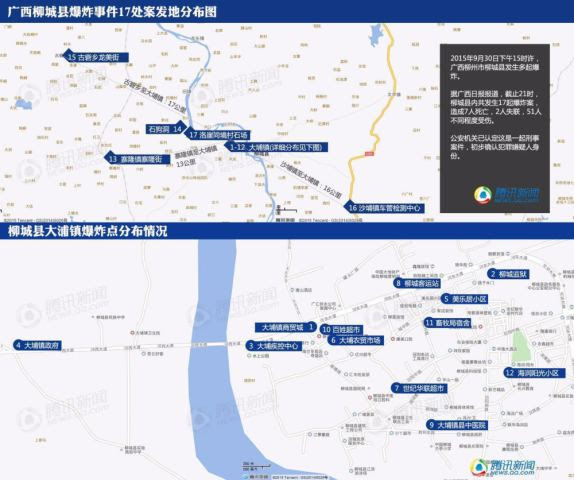
    广西柳城发生17起包裹爆炸致7死51伤 嫌犯身份确定


    腾讯新闻
    事发现场
    腾讯新闻

    新华社南宁9月30日电(记者李斌)广西柳城县警方通报,9月30日在柳城县发生的17起包裹爆炸事件已致7人死亡,已排除暴恐案件的可能性,犯罪嫌疑人身份已确定。
    通报称,9月30日15时15分起,柳州市柳城县陆续发生17起快递包裹爆炸事件。目前已造成7人死亡2人失联,另有51人不同程度受伤。
    爆炸事件发生在柳城县商贸城、县畜牧局宿舍楼等多处。
    警方初步了解,这一爆炸事件可能为快递包裹引发。经过连续开展甄别调查核实,这一案件已排除暴恐案件的可能性,犯罪嫌疑人身份已确定,案件调查、维稳善后等工作正在抓紧进行中。