samedi 29 août 2015

China Sentences 45 in Restive Region of Xinjiang


The New York Times, 28 August 2015
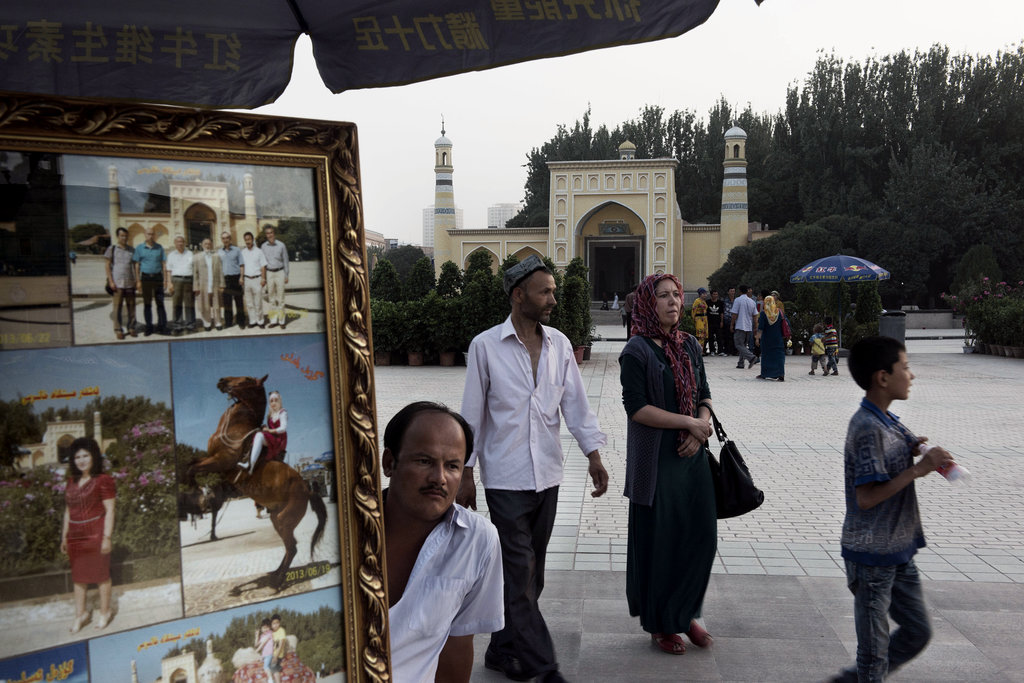
20140808UIGHURS-slide-105I-jumbo-v2By Chris Buckley – Courts across Xinjiang, the volatile region of western China, have sentenced 45 people to prison in recent days after convicting them of supporting organizations accused of terror attacks or of helping others flee abroad, Xinhua, the main state news agency, reported on Thursday.
The Xinhua report did not describe the ethnicity of the defendants, but their names indicated that they wereUighurs, the Turkic minority in Xinjiang that has become increasingly estranged from Chinese government policies, especially restrictions on their culture and Muslim religion.
The government held up the convictions as proof that it would not tolerate violent opposition in Xinjiang, which in recent years has suffered a spate of violent attacks by Uighurs, in many instances using knives or rudimentary explosives. The government describes the attacks as terrorism, frequently masterminded from abroad, but human rights groups and advocates of Uighur self-determination have said that the violence is often primitive and locally inspired, and driven by Uighur despair.
“The people’s courts have zero tolerance for terror crimes,” said an unnamed official from the highest court in Xinjiang, according to Xinhua. “They will continue to use the law to strike hard against the crime of illegally leaving the country, and use the law to strike hard against criminals who flee abroad and attempt to join in jihad.”
Courts in Aksu, Ili, Kashgar and other cities across Xinjiang convicted the defendants for crimes in 10 separate cases that included “organizing, leading and participating in terror organizations,” as well as organizing people to flee abroad, Xinhua said.
The Chinese government has sought to stop Uighurs from fleeing abroad. They have often settled in Turkey after circuitous journeys through Southeast and Central Asia. In July,Thailand deported about 100 Uighursback to China.
“There have been growing numbers of Uighurs escaping from China, and this crackdown is directly related to trying to stop the escapes,” Dilxat Raxit, a spokesman for the World Uyghur Congress, a group that advocates Uighur self-determination, said in a telephone interview from Stockholm. Uyghur is an alternative spelling of Uighur.
“But I believe that the Uighurs are fleeing abroad because of the specific policies that the Chinese government has enforced to oppress them,” he said. “These aren’t terrorists; they’re Uighurs wanting a safe place to live.”
Many of the cases announced on Thursday involved people accused of organizing others to leave Xinjiang, which is next to Central Asia. And the prosecutors depicted the defendants as bewitched by Islamist extremism and violent separatism.
In one case, the five defendants had fled on a truck to Tajikistan, where they were detained near the frontier with Afghanistan and sent back to China.
The prosecution charged that they wanted to join the Taliban and the East Turkestan Islamic Movement, a group that China depicts as the instigator of violence in Xinjiang. Many experts are skeptical that the group is as powerful and extensive as the Chinese government says.
In another case, the prosecution claimed that the three defendants hoped to reach Turkey using fake Turkish passports so that they could join a violent group and carry out jihad, according to Xinhua.
The Xinhua report did not say whether any of the defendants had admitted to the charges against them. In China, defendants come under intense pressure to make such confessions.

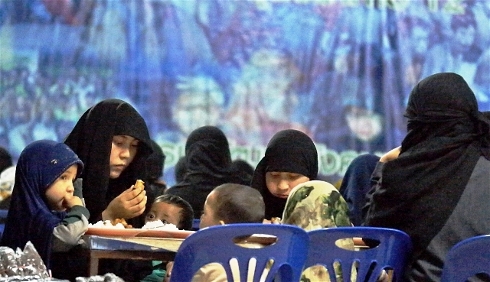
Will Thailand deport Uighurs who fled China


IRIN, 28 August 2015
download
By Anneliese Mcauliffe – Despite Thailand’s recent deportation of 109 ethnic Uighurs to China where they could face torture, about 60 members of the persecuted minority who remain in detention are refusing to register with the United Nations as asylum seekers.
Uighur activists say the detainees are likely reluctant to apply for asylum because they do not trust that the UN will be able to prevent their deportation, and they are afraid that personal information provided during the registration process could fall into the hands of Chinese authorities and endanger their families.
Seven weeks after Thailand deported the group of 109 to China, the future is uncertain for the remaining Uighurs, a Turkic-speaking Muslim minority from China’s western region of Xinjiang. Their forced removal sparked protests in Turkey against the Chinese embassy and the Thai consulate, as well as Chinese-owned businesses.
Thousands of Uighurs are believed to have fled Xinjiang where China has cracked down on dissent, citing concerns about terrorism and separatism. Human Rights Watch says Uighurs face “pervasive ethnic discrimination, severe religious repression, and increasing cultural suppression”.
For those who escape to other countries only to be sent back, the punishments may be even more severe. Countries including Pakistan, Malaysia, Kazakhstan and Cambodia have also forcibly returned Uighurs to China, and rights groups say that some of them were never heard from again.
Thailand’s decision to deport 109 Uighurs prompted a warning from the UN’s refugee agency, UNHCR, that they could face persecution and even torture after being sent back to China.
Yet the remaining detainees have chosen not to seek protection from abuses back home by applying for asylum, UNHCR has told IRIN.
Distrust of the UN is likely one reason for choosing not to apply, according to Ala Mentimin, vice president of the World Uighur Congress, a Washington D.C.-based advocacy group. While he has not been able to speak to those in detention in Thailand, he said they probably hold similar views as those he has interviewed in Malaysia and Turkey.
“They have no trust in the UNHCR, which has failed to stop deportations in the past,” he said.
The Cambodia case
Mentimin cited the 2009 deportation of 20 Uighurs from Cambodia where they had applied for asylum. Security personnel took them at gunpoint from a safe house and drove them to a military airport where they were put aboard an unscheduled charter flight to China.
A classified United States diplomatic cable sent from its embassy in Cambodia and made public by WikiLeaks suggests that UNHCR agreed that it did not do enough to protect the Uighurs.
The cable describes a meeting between US Chargé d’Affaires Theodore Allegra and other diplomats and UNHCR Regional Representative Raymond Hall.
“Hall confirmed that UNHCR had made no special accommodations for protection or processing of this group, despite the high visibility and Chinese pressure attendant to their cases, but acknowledged that with the ‘wisdom of hindsight’ the UNHCR might have handled the Uighur case differently,” the cable reads.
Nicholas Bequelin, East Asia director for Amnesty International, said another reason Uighurs who have escaped China may choose not to apply for asylum is because they are worried that personal information they provide to UNHCR could find its way back to Chinese authorities.
“The fear that their families may face persecution back in Xinjiang could be preventing them from registering with the UNHCR,” he said. “Registering with the UNHCR requires handing over a great deal of information, and they may fear that this information may not be secure.”
One more reason for refusing to register in Thailand as asylum seekers is that they are not interested in being resettled to a third country once obtaining refugee status, according to UNHCR.
“Turkey has traditionally taken them in,” said UNHCR spokesperson Vivian Tan. “They are only looking for ways to get to Turkey.”
Caught in the great game
Uighurs who flee China often pay human smugglers between US $10,000 and $30,000, according to Mentimin of the World Uighur Congress.
Uighur sources told IRIN on condition of anonymity that those detained in Thailand had travelled overland through Vietnam and Cambodia using buses and private cars.
Uighurs fleeing China are almost always trying to get to Turkey where many have already settled and where the government has an open door policy. But if they are intercepted along the way, they find themselves caught in a geopolitical power struggle in which Beijing exerts pressure on countries to ignore their obligations under international law and forcibly return them.
Days after Cambodia deported 20 Uighurs in 2009, China’s then vice-president Xi Jinping visited the country and signed off on a package of grants, loans and infrastructure development deals worth more than US $1 billion.
“UNHCR Regional Representative Raymond Hall stated that although Cambodia had tried hard over the years to assume refugee responsibilities, it was unable to withstand direct pressure from China in its first major test,” according to the US diplomatic cable released by Wikileaks.
Likewise, rights advocates say that China exerted pressure and made backroom deals with Thailand’s military government, which took power in a May 2014 coup that was condemned by the US and other countries.
“It’s quite clear that the military junta buckled under pressure from China to send the Uighurs back into harm’s way, and by doing so further trashed Thailand’s already diminished reputation as a rights respecting government,” said Phil Robertson, deputy Asia director for Human Rights Watch.
“The big question is what did Bangkok receive in return from Beijing for this clear betrayal of Thailand’s international rights obligations under the Convention against Torture,” he told IRIN.
In the wake of the controversy, Thai authorities defended themselves, saying the government had not simply acceded to China’s request to return all 328 Uighurs who were being held in detentions centres throughout the country.
“China asked for all Uighur Muslims in Thailand to be sent back but we said we could not do it,” Colonel Weerachon Sukhondhapatipak, deputy Thai government spokesman, told reporters on 10 July.
He said authorities had determined that more than 170 Uighurs were Turkish citizens and allowed them to go to Turkey. Sukhondhapatipak said at the time that authorities were assessing the identities of those still in detention centres.
Those Uighurs remain in custody today, waiting for a decision that could send them into the welcoming arms of friends and family in Turkey, or into the black hole of China’s security apparatus.

China's Uyghur University Students Are Closely Watched For Their Political Views


2015-08-27
Ethnic Uyghur students at a top university in northwestern China’s Xinjiang region are being closely checked for their political and religious views by student informers who report to “political guides” embedded in the university staff, a former school administrator says.
“Student spies are hidden in every classroom, dormitory, and lecture hall,” a former staff member in the president’s office of Xinjiang Normal University told RFA’s Uyghur Service.
“They record students’ debates, arguments, and discussions of sensitive subjects, and sometimes they raise certain topics themselves just to draw out students’ comments and opinions,” RFA’s source said, speaking on condition of anonymity.
Though the school, which is located in the regional capital Urumqi, educates both ethnic Uyghurs and Han Chinese, informers are increasingly being drawn from the Uyghur student population because university authorities are more interested in the political views of this group, he said.
“Each year, dozens of Uyghur students become the subjects of student spies’ secret reports, with some accused of religious extremism and others labeled as ‘separatists’ or ‘ethnic nationalists,” he said.
Student informers submit their reports to “political guides” who are assigned to each department of the school and operate under the supervision of the ruling Chinese Communist Party’s university branch, the source said, adding that the “guides” also teach political courses at the school.
The student spies are later employed as “guides” themselves, or are sent to their home prefectures after graduating with special recommendations from the Party for promotion in any job they take, the source said.
Political loyalty important
Han Chinese and Uyghur students are meanwhile selected for study abroad, with financial support provided by China’s Ministry of Education, based primarily on their “political qualifications,” RFA’s source said.
“The candidates who are selected first are Communist Party members, active in Party programs, or government loyalists.”
“Of course, academic achievements are also considered, but ‘political qualifications’ are the most important criteria,” he said.
Xinjiang, which is home to millions of Turkic-speaking Uyghurs, has seen an upsurge in violence that has left hundreds dead since 2012, and which China has blamed on terrorists and Islamic insurgents seeking to establish an independent state.
But rights groups accuse Chinese authorities of heavy-handed rule in Xinjiang, including violent police raids on Uyghur households, restrictions on Islamic practices, and curbs on the culture and language of the Uyghur people.
Reported by Eset Sulaiman for RFA’s Uyghur Service. Translated by Eset Sulaiman. Written in English for Richard Finney.

China sentences 45 in Xinjiang in illegal border crossing cases


 Thu Aug 27, 2015 11:02am BST
China sentenced 45 people to prison in its Xinjiang region for cases involving illegal border crossings, state media reported on Thursday, saying they sought out "holy war" and had committed crimes including organising or funding "terrorist groups".
Hundreds, possibly thousands, of Muslim ethnic Uighurs, keen to escape unrest in their western home region of Xinjiang, have travelled clandestinely via Southeast Asia toTurkey.
Beijing, which blames Islamist militants for violent attacks in Xinjiang in the past three years in which hundreds have died, says some people are trafficked across the border and end up fighting for groups such as Islamic State in Iraq and Syria.
Authorities sentenced 43 people in recent days, involved in 10 cases from the Xinjiang cities of Ili, Karamay, Aksu, Kashgar and Hotan, to between four and 15 years in jail, with two others given life sentences, the official Xinjiang Daily said.
Those sentenced were involved in "organising, leading, or participating in terrorist groups, funding terrorist groups, and organising others to illegally cross the border", it said.
"Among the 10 cases, all those who tried to illegally leave the country were poisoned with religious extremist ideology, and were enticed and manipulated by smugglers to take part in holy war," the newspaper said.
China is home to about 20 million Muslims spread across its vast territory, only a portion of whom are Uighurs, who speak a Turkic language.
Officials in Beijing say separatists from Xinjiang are trying to set up an independent state called East Turkestan and deny accusations by rights advocates that China restricts Uighurs' religious freedom and culture.
"China's policy of suppression is leading to Uighurs seeking security through illegal immigration," World Uyghur Congress spokesman Dilxat Raxit said in an emailed statement.
"The harsh punishment is shifting political responsibility for the cause of illegal immigration."
In July, Thailand deported 109 Uighurs back to China, feeding concern among rights groups and the United States that they could be mistreated upon their return, and sparking anger in Turkey, home to a large Uighur diaspora.
Turkey has vowed to keep its doors open to Uighur migrants fleeing persecution in China, exacerbating a row with Beijing.
About 170 Uighur women and children arrived in Turkey in late June from Thailand, where they had been held for more than a year for illegal entry, the U.S.-based Radio Free Asia has reported.
(Reporting by Michael Martina; Editing by Robert Birsel)

China Sentences 45 in Restive Region of Xinjiang


By CHRIS BUCKLEY
AUG. 27, 2015
HONG KONG — Courts across Xinjiang, the volatile region of western China, have sentenced 45 people to prison in recent days after convicting them of supporting organizations accused of terror attacks or of helping others flee abroad, Xinhua, the main state news agency, reported on Thursday.
The Xinhua report did not describe the ethnicity of the defendants, but their names indicated that they were Uighurs, the Turkic minority in Xinjiang that has become increasingly estranged from Chinese government policies, especially restrictions on their culture and Muslim religion.
The government held up the convictions as proof that it would not tolerate violent opposition in Xinjiang, which in recent years has suffered a spate of violent attacks by Uighurs, in many instances using knives or rudimentary explosives. The government describes the attacks as terrorism, frequently masterminded from abroad, but human rights groups and advocates of Uighur self-determination have said that the violence is often primitive and locally inspired, and driven by Uighur despair.
“The people’s courts have zero tolerance for terror crimes,” said an unnamed official from the highest court in Xinjiang, according to Xinhua. “They will continue to use the law to strike hard against the crime of illegally leaving the country, and use the law to strike hard against criminals who flee abroad and attempt to join in jihad.”
Courts in Aksu, Ili, Kashgar and other cities across Xinjiang convicted the defendants for crimes in 10 separate cases that included “organizing, leading and participating in terror organizations,” as well as organizing people to flee abroad, Xinhua said.
The Chinese government has sought to stop Uighurs from fleeing abroad. They have often settled in Turkey after circuitous journeys through Southeast and Central Asia. In July, Thailand deported about 100 Uighursback to China.
“There have been growing numbers of Uighurs escaping from China, and this crackdown is directly related to trying to stop the escapes,” Dilxat Raxit, a spokesman for the World Uyghur Congress, a group that advocates Uighur self-determination, said in a telephone interview from Stockholm. Uyghur is an alternative spelling of Uighur.
“But I believe that the Uighurs are fleeing abroad because of the specific policies that the Chinese government has enforced to oppress them,” he said. “These aren’t terrorists; they’re Uighurs wanting a safe place to live.”
Many of the cases announced on Thursday involved people accused of organizing others to leave Xinjiang, which is next to Central Asia. And the prosecutors depicted the defendants as bewitched by Islamist extremism and violent separatism.
In one case, the five defendants had fled on a truck to Tajikistan, where they were detained near the frontier with Afghanistan and sent back to China.
The prosecution charged that they wanted to join the Taliban and the East Turkestan Islamic Movement, a group that China depicts as the instigator of violence in Xinjiang. Many experts are skeptical that the group is as powerful and extensive as the Chinese government says.
In another case, the prosecution claimed that the three defendants hoped to reach Turkey using fake Turkish passports so that they could join a violent group and carry out jihad, according to Xinhua.
The Xinhua report did not say whether any of the defendants had admitted to the charges against them. In China, defendants come under intense pressure to make such confessions.

Bangkok Bombing Spotlights Uyghur Woes in Southeast Asia


Following the attack on the Erawan Shrine on August 18 in central Bangkok, which killed 20, including a number of Chinese tourists, and injured more than 100, Thai authorities and media speculated that the attack could be the work of Uyghur extremists from China’s restive Xinjiang province.
Given the fact that there are other Thai actors with immediate motives to undermine the current military junta, such as disaffected “Red Shirts” (supporters of exiled former Prime Minister Thaksin) and Muslim separatists from southern Thailand, a Uyghur link would appear on the surface to be unlikely.
Yet the Uyghurs have in fact become a thorny issue for the Thai government and other Southeast Asian nations in their relations with China, and further investigation into the extent of the region’s “Uyghur problem” reveals the extent of Beijing’s reach.
Southeast Asia has emerged over the past five years as a major transit zone for Uyghur refugees seeking asylum in Turkey (a country with a well-established Uyghur exile community) and Europe, as their traditional migration routes via Central and South Asia have been closed off by ongoing conflict in Afghanistan and greater security cooperation among governments in those regions with Beijing.
Thailand, in particular, as highlighted by the ongoing controversy regarding people smuggling of Muslim Rohingyas from Burma, has become a hub of illegal migration. It is increasingly apparent that Uyghurs are also now part of such flows. In November last year, Thai authorities discovered around 100 Uyghurs, including women and children, living in squalid conditions in a people-smuggler run camp in southern Thailand, while a further 200 were discovered living in a jungle camp in Songkhla province in March this year.
This has created a major problem for Thailand in its increasingly close relationship with Beijing. Last month, under considerable pressure from Beijing, Thailand forcibly repatriated 109 Uyghurs to China, causing outrage amongst the Uyghur diaspora and human rights NGOs who feared they would face arrest or worse on their return.
The United Nations Human Rights Commission deemed Thailand’s decision to be a “flagrant breach of international law,” while Human Rights Watch described Thailand’s apparent cave in to Chinese pressure as both “shocking and disturbing.” Thai Prime Minister Prayut Chan-ocha’s callous remark at the time that, “If we send them back and there is a problem that is not our fault” certainly did not do anything to combat such criticism.
The core issue at stake here, as Alim Seytoff, president of the Uyghur American Association (UAA), has noted is that China is increasingly able to leverage its economic and strategic weight in countries such as Thailand to seek the forcible return of individuals in “disregard of international human rights conventions and norms” to which it ostensibly abides.
Yet China’s approach should come as little surprise. In fact, it mirrors China’s strategy to combat perceived Uyghur separatism and terrorism in its relations with the Central Asian republics (with which Xinjiang shares borders) over the past two decades, whereby increased Chinese economic investment and aid coincided with greater restrictions and surveillance targeting Uyghur communities and migrants there. Often, official visits by Chinese leaders to these states would be accompanied by the extradition of Uyghur “terrorists” back to Xinjiang and the signing of bilateral economic agreements .
This pattern has been discernible over the past few years in China’s relations with a number of other Southeast Asian countries. In December 2009, for instance, Cambodia, under Chinese pressure, deported 20 Uyghurs back to China and days later inked a lucrative trade and investment package during then-Vice Premier Xi Jinping’s visit to the country. Similar incidents have also occurred in Malaysia, Burma, Laos and Vietnam, with an estimated total of 72 Uyghurs forcibly repatriated to China between 2010 and 2014. The Thai decision to return the 109 Uyghurs also coincided with the Thai navy’s decision to purchase three submarines from China worth $1 billion.
Beijing, for its part has maintained that the Uyghurs were not in fact “refugees” but “jihad recruits” on their way to fight in the Syrian conflict via Turkey. Beijing has cited in this respect the precedent of its arrest of nine Uyghurs and 10 Turkish nationals accused of facilitating their recruitment, en route to Syria in Shanghai in January this year.
In the case of the Thai Uyghurs however, Beijing has proffered little in the way way of evidence. Subsequent footage aired on CCTV of the Uyghurs on their flight back to China handcuffed, hooded and flanked by Chinese security personnel has done little to dispel concerns as to their ultimate fate.
What is clear is that the Uyghur issue is set remain a point of tension in Southeast Asia’s relations with Beijing as these states attempt to deal with growing illegal migration flows and China’s efforts to leverage its strategic weight in pursuit of its own narrow interest in combatting what it perceives as “Uyghur terrorism.”
Dr. Michael Clarke is Associate Professor at the National Security College, ANU. He is the author of Xinjiang and China’s Rise in Central Asia – A History (Routledge 2011).

China's Policy Forcing Uyghur Muslims to Sell Alcohol 'a Failure,' Sources Say


Policy directives ordering ethnic Uyghur shopkeepers in China’s Xinjiang region to stock alcohol and cigarettes are failing in their intended effect, with consumers refusing to buy the products and openly mocking the government’s apparent bid to undermine local Islamic custom, sources say.
Now in force for the last six months in Kashgar (in Chinese, Kashi) prefecture’s Kargilik (Yecheng) county, the policy has not led to an increase in alcohol consumption among the population, a local businessman and former government employee told RFA’s Uyghur Service.
“In fact, I would say the number of people drinking has gone down,” RFA’s source said, speaking on condition of anonymity.
“The few people in the towns around here who habitually drink still buy their alcohol from shops run by Han Chinese, as they always have,” he said.
“This ridiculous policy has failed very clearly,” he said.
Chinese authorities’ efforts to promote the sale in Uyghur shops of alcohol and cigarettes were first reported in neighboring Hotan (Hetian) prefecture in May, with a public notice stating that the order had been handed down “from the top echelons of [the ruling Chinese Communist Party].”
“We have a campaign to weaken religion here, and this is part of that campaign,” one local official, Adil Sulayman, told RFA in an earlier report.
'I had no choice'
In the Islamic faith, the Quran refers to the use of alcohol as a “sin,” while many Muslims discourage the smoking of cigarettes as a self-destructive practice.
“I worried a lot about the public’s reaction to my selling alcohol in my store,” Kasimahun Hashim, a shopkeeper in Kargilik county’s Saybagh township, recently told RFA.
“But now I feel relaxed, because I see that the people’s anger over this is all being directed toward the [government].”
“As a religious man, I felt it would be impossible to keep alcohol in my store,” another shopkeeper, Memtimin Qari, said, adding, “But I had no choice.”
Though government officials then brought two crates of distilled liquor, a crate of beer, and boxes of cigarettes to his store with orders to prominently display them, “So far, I have only sold two packets of cigarettes, and no alcohol at all,” Qari said.
“The other stores in our township have not sold any either,” he said.
Stability concerns
Government orders forcing Uyghur shopkeepers to stock alcohol are not aimed at forcing anyone to drink, though, Hoyla village security chief Tursun Turaq told RFA.
“We just put in on the shelves so that people who want to drink may have the opportunity,” he said.
“Some religious extremists tell people, ‘don’t drink,’ and this pulls young people into their way of seeing things.”
“That is why the government issued these orders: to strengthen stability in the region,” he said.
Xinjiang, which is home to millions of Turkic-speaking Uyghurs, has seen an upsurge in violence that has left hundreds dead since 2012, and which China has blamed on terrorists and Islamic insurgents seeking to establish an independent state.
But rights groups accuse Chinese authorities of heavy-handed rule in Xinjiang, including violent police raids on Uyghur households, restrictions on Islamic practices, and curbs on the culture and language of the Uyghur people.
Reported by Shohret Hoshur for RFA’s Uyghur Service. Translated by Shohret Hoshur. Written in English by Richard Finney.